
For international medical graduates (IMGs) who wish to work as anaesthetists in the NHS, the FRCA (Fellowship of the Royal College of Anaesthetists) is a cornerstone qualification that underpins safe practice, regulatory approval, and career progression in the UK.
While IMGs may obtain GMC registration through routes such as PLAB or recognized overseas qualifications, this alone is not sufficient for progression in anaesthesia. The GMC requires objective evidence that a doctor has achieved UK specialty-level competence. Passing FRCA provides this evidence and demonstrates alignment with the UK anaesthesia curriculum and standards of Good Medical Practice.
This exam is awarded by the Fellowship of the Royal College of Anaesthetists and is internationally recognized as a rigorous and high-quality assessment. It is divided into the FRCA Primary Exam, which tests foundational knowledge in physiology, pharmacology, physics, and clinical measurement, and the FRCA Final Exam, which assesses advanced clinical knowledge, judgement, and safe independent practice. Success in both confirms that an IMG has the knowledge, skills, and professional attributes expected of a UK-trained anaesthetist.
For IMGs, this exam is essential for progression beyond junior or non-training posts. It is a mandatory requirement for CESR, entry onto the GMC Specialist Register, and appointment to substantive consultant roles. Doctors who pass the exam are eligible for recognition as a Member of the Royal College of Anaesthetists, further strengthening professional credibility within the NHS.
In summary, the FRCA bridges international training with UK standards, enabling IMGs to practise anaesthesia safely, progress professionally, and contribute fully to NHS patient care.
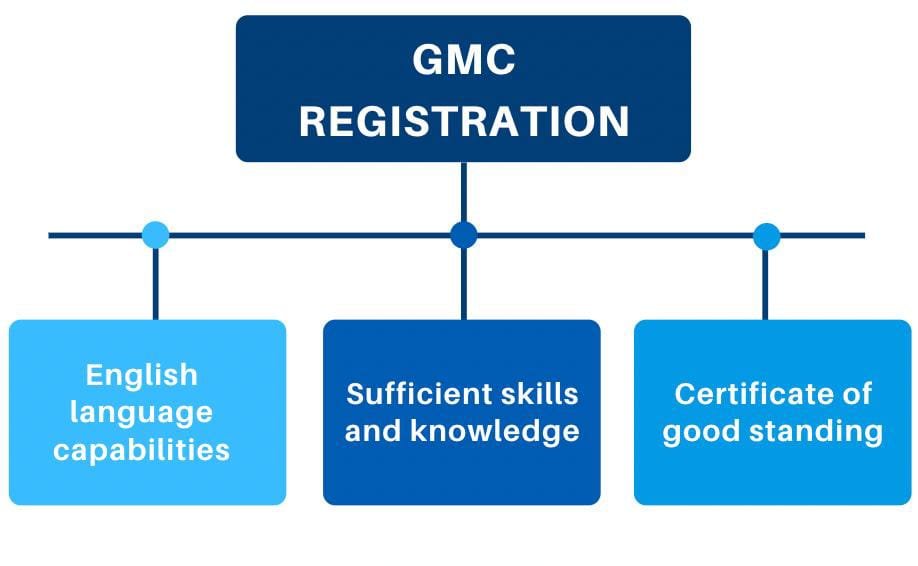
Importance of GMC Registration
GMC registration is essential for any doctor who wishes to practice medicine legally in the United Kingdom. It confirms that a doctor meets the required standards of knowledge, skills, professionalism, and patient safety as defined by the General Medical Council. Without GMC registration, a doctor cannot work in the NHS, prescribe medications, or hold any clinical post with direct patient responsibility.
The value of GMC registration is closely linked to the principles of the NHS, which is founded on patient safety, equity, accountability, and high-quality care. By regulating doctors, the GMC helps maintain public trust in the NHS and ensures that all practitioners—regardless of where they trained—are safe, competent, and fit to practice. This regulatory oversight is particularly important in high-responsibility specialties such as anaesthesia.
Importantly, it is possible to obtain GMC registration without completing the full FRCA qualification. International medical graduates may be eligible for GMC registration by passing the Primary Exam alone, as it is recognized as an acceptable postgraduate qualification for registration purposes. While the Final Exam and full Fellowship are required for specialist registration and consultant-level progression, completion of the Primary exam can be sufficient to demonstrate the necessary knowledge standard for initial GMC certification.
In summary, GMC registration enables doctors to work safely within the NHS, protects patients, and provides a regulated pathway for international doctors to enter UK medical practice.
What is the meaning of TEE and how it is use by IMGs to apply and sit for the FRCA examination!
TEE stands for Training, Experience and Equivalence. It is a formal pathway used by the Royal College of Anaesthetists that allows international medical graduates (IMGs) to demonstrate eligibility to apply for and sit the FRCA examinations. Through the TEE process, IMGs must provide proof of registration from an international medical council, confirming they are legally qualified to practise medicine in their home country. In addition, applicants must submit evidence of completing an anaesthetic training programme or proof of current attendance in recognized anaesthesia training. This documentation confirms appropriate clinical exposure and experience, enabling IMGs to access the exam.
The Primary Exams:
The Primary FRCA (Fellowship of the Royal College of Anaesthetists) examination is the first major postgraduate assessment for doctors training in anaesthesia. It tests the scientific principles that underpin safe anaesthetic practice and is designed to ensure candidates have a strong foundation in basic and applied sciences before progressing to higher clinical responsibility.
To be eligible for the Primary exam, a candidate must hold national registration with a recognized international medical council and must have applied for Temporary Examination Eligibility (TEE) with the Royal College of Anaesthetists. In addition, before attempting the later components of the exam, candidates must obtain an Overseas Competency in Anaesthetics award, confirming adequate clinical experience and supervision in anaesthesia.
The Primary exam consists of two main parts.
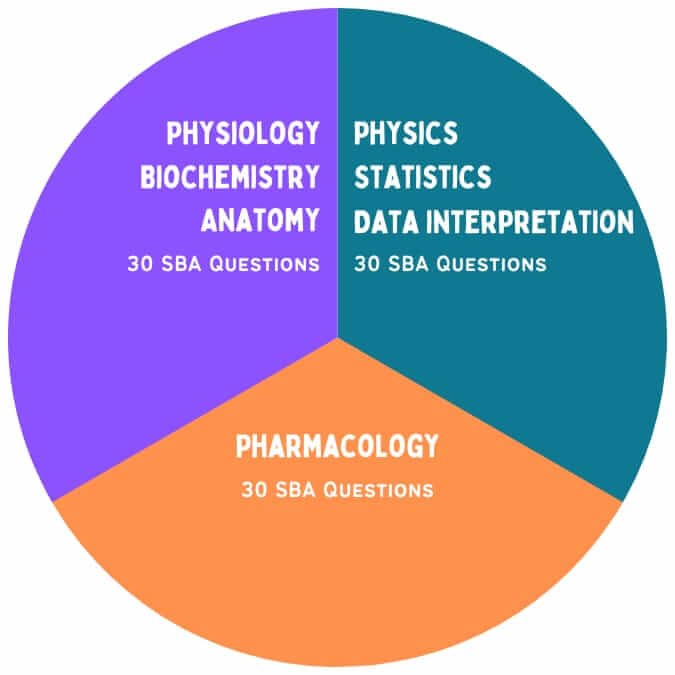
Part 1: The MCQ Examination
The first part is a written Multiple Choice Question (MCQ) examination. This exam contains 90 multiple-choice questions, which must be completed within three hours. The MCQ assesses a candidate’s understanding of the core scientific knowledge required for anaesthetic practice.
The content is broad and includes:
- Pharmacology, focusing on anaesthetic agents, analgesics, muscle relaxants, cardiovascular drugs, and their mechanisms of action, pharmacokinetics, and pharmacodynamics
- Physiology, covering cardiovascular, respiratory, neurological, renal, and endocrine systems
- Physics, particularly principles relevant to anaesthesia such as gases, vapours, pressure, flow, electricity, and ultrasound
- Clinical measurement, including monitoring of vital signs, blood gases, and haemodynamics
- Data interpretation, requiring analysis of graphs, charts, and clinical data
The MCQ examination is held three times a year, in March, September, and November. Candidates must pass or complete this MCQ exam before progressing to the second part of the Primary exam.
Part 2: The OSCE and SOE
The second part consists of the Objective Structured Clinical Examination (OSCE) and the Structured Oral Examination (SOE). These two assessments are taken together and can only be attempted after successful completion of the MCQ exam. Additionally, candidates must have been awarded an Overseas Competency in Anaesthetics before sitting the OSCE and SOE.
The OSCE focuses on demonstrating practical, procedural, and cognitive skills. It consists of eight stations, completed over 108 minutes. Stations may test tasks such as equipment checks, interpretation of monitoring, applied anatomy, communication skills, crisis management, and clinical reasoning in anaesthetic scenarios.
The SOE assesses depth of understanding and the ability to apply scientific principles verbally. It is divided into two sections, each lasting 30 minutes.
- The first section includes six questions on pharmacology, physiology, and biology.
- The second section includes six questions covering physics, clinical measurement, safety, and anaesthetic equipment.
Together, the OSCE and SOE evaluate a candidate’s readiness to apply scientific knowledge safely and effectively in clinical anaesthesia, marking a crucial step toward completion of the FRCA qualification.
The Final Exams:
The Final FRCA (Fellowship of the Royal College of Anaesthetists) examination is the final summative assessment in UK anaesthetic training. It evaluates whether a trainee has reached the standard required for independent consultant-level practice by testing advanced clinical knowledge, decision-making, and professional judgement across the full scope of anaesthesia, intensive care, pain medicine, and peri-operative care.
To be eligible for the Final FRCA, candidates must have passed the Primary FRCA, completed the required period of approved anaesthetic training, and met the Royal College of Anaesthetists’ competency and workplace-based assessment requirements.
The Final FRCA consists of two main components: a written examination and a clinical/oral examination.
The written examination includes two papers, each lasting three hours. The questions are Single Best Answer (SBA) and Constructed Response Questions (CRQs). These papers assess applied clinical knowledge rather than basic science. The syllabus covers general and regional anaesthesia, peri-operative medicine, critical care, resuscitation, trauma, pain management, obstetric and paediatric anaesthesia, ethics, and patient safety. Candidates are expected to demonstrate evidence-based practice and sound clinical reasoning.
The clinical/oral component consists of a Structured Oral Examination (SOE) and an Objective Structured Clinical Examination (OSCE). The SOE tests higher-level clinical judgement through structured discussion of complex anaesthetic cases, complications, and management strategies. The OSCE assesses practical and professional skills, including communication, interpretation of investigations, equipment use, and management of peri-operative emergencies.
Overall, the Final EXAM confirms that the candidate can deliver safe, effective, and independent anaesthetic care across a wide range of clinical settings.
Passing the FRCA Exams:

If you’re sitting for an exam, the goal is simple: pass first time. It’s no difference with this exam as it demands a huge investment of time, money, and mental energy. Many candidates find themselves buried under stacks of anaesthesiology textbooks—physiology, physics, pharmacology, anatomy, and clinical sciences—only to feel overwhelmed, exhausted, and unsure if they’re preparing the right way.
That’s where Meds Solution UK comes in.
Meds Solution UK is designed to help candidates prepare smarter, not harder. Instead of endless reading and burnout, you get structured, exam-focused guidance aligned with the exam syllabus. Our approach breaks down complex topics into clear, high-yield concepts that are directly relevant to the MCQ, OSCE, and SOE components of the exam.
We focus on exam technique, understanding examiner expectations, and applying knowledge confidently, not just memorising facts. With targeted revision strategies, practice-based learning, and expert support, candidates can reduce stress while improving accuracy and confidence.
Preparing for this exam doesn’t have to mean constant anxiety and exhaustion. With Meds Solution UK, you can approach the exam with clarity, confidence, and a clear plan—giving yourself the best possible chance of clearing all sections of the exam and moving forward in your anaesthesia career with confidence.
Conclusion
In conclusion, the FRCA examinations represent a demanding but essential milestone in the journey to becoming a competent and confident anaesthetist. From the scientifically focused Primary FRCA to the clinically driven Final FRCA, each stage is designed to rigorously assess knowledge, skills, and professional judgement. While the breadth of content and depth of understanding required can feel overwhelming—often leading to fatigue, stress, and uncertainty—success is absolutely achievable with the right guidance and preparation strategy.
Rather than navigating this challenging pathway alone, candidates benefit greatly from structured, exam-focused support that simplifies complex concepts and targets what truly matters for the exam. With the right approach, preparation becomes more efficient, confidence grows, and anxiety reduces. Meds Solution UK is committed to supporting candidates at every stage of the exam journey, helping them prepare effectively, avoid burnout, and aim confidently for a first-time pass. With clear direction, expert support, and focused preparation, this exam becomes not just a hurdle, but a rewarding step toward a successful career in anaesthesia.
Tags:
passing the frca exam, frca preparation, frca exam tips and tricks, mrca vs frca, frca exam eligibility, frca exam fees, frca exams, frca exams for IMG’s, frca guidance, frca preparation strategy, frca primary exam, frca final exam, frca certification, frca convocation,